
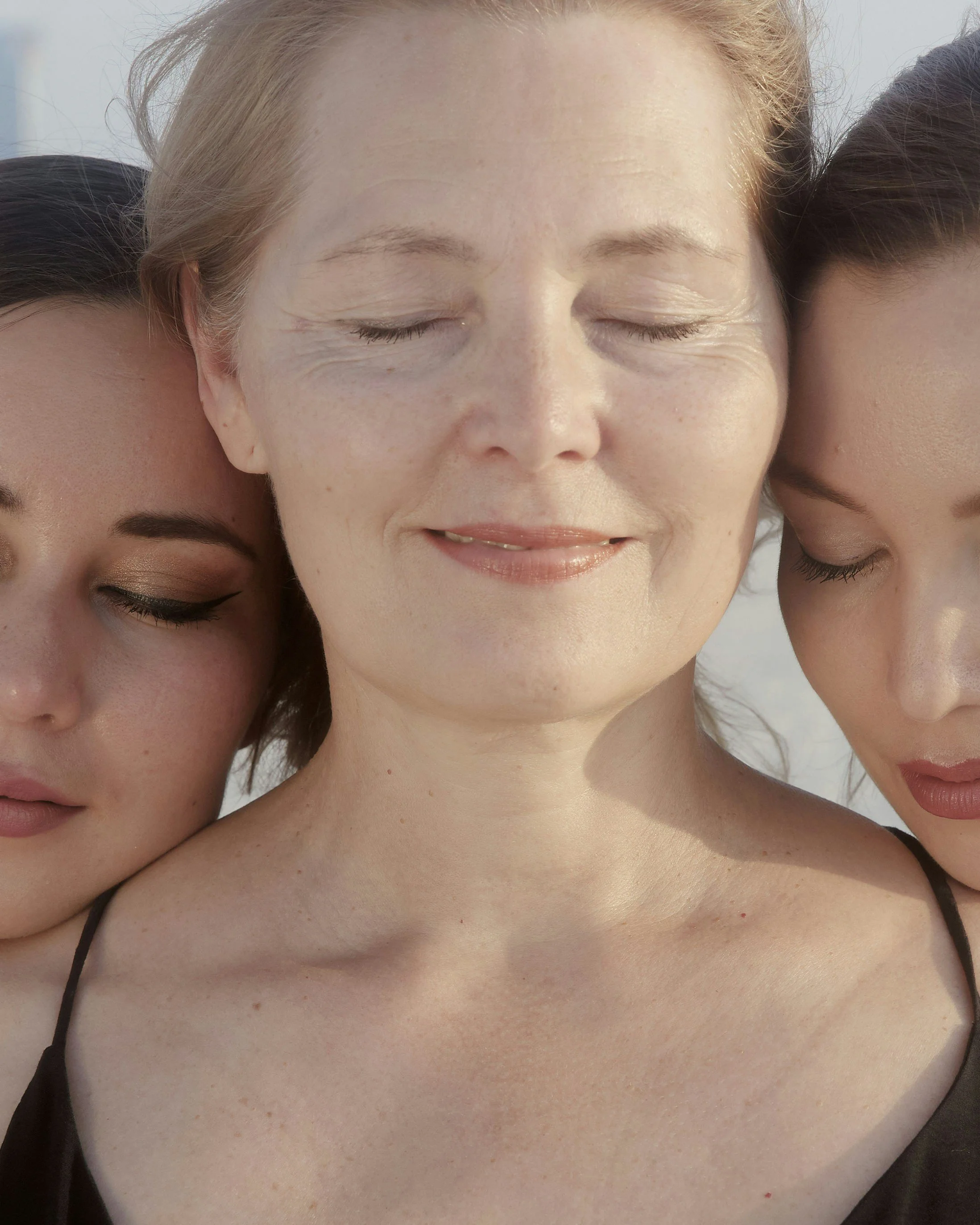
You've probably had the experience of feeling calmer in the presence of certain people. Maybe it's a friend who makes everything feel more manageable, or a practitioner whose office feels like a refuge. Something settles in you when you're with them, even before any words are exchanged.
This is biological. Your nervous system is constantly reading the nervous systems around you, taking cues about whether the environment is safe. When you're in the presence of a regulated nervous system, yours begins to settle too.
This is co-regulation, and it's one of the most fundamental aspects of how humans heal.
What Is Co-Regulation?
Co-regulation is the process by which one nervous system helps another nervous system regulate. It happens automatically, below conscious awareness, through cues like tone of voice, facial expression, body posture, and breathing rate.
When a calm, regulated person is present with someone who is activated or distressed, their nervous system sends signals of safety. The distressed person's nervous system receives these signals and begins to settle in response. It happens automatically, through the biology of connection.
Co-regulation is how we first learned to regulate at all. Infants are born with immature nervous systems that can't regulate independently. They depend entirely on their caregivers to help them manage arousal, to soothe them when distressed, to bring them back to baseline. Through thousands of co-regulating interactions, the child's nervous system gradually develops the capacity to regulate on its own.
This is why early attachment matters so much. The quality of co-regulation a child receives shapes the architecture of their nervous system. Children with responsive, attuned caregivers develop robust self-regulation capacities. Children whose caregivers were unavailable, inconsistent, or themselves dysregulated may struggle with regulation their entire lives.
Why Self-Regulation Has Limits
There's a cultural emphasis on self-regulation, on being able to manage your own emotions and calm yourself down. And self-regulation does matter. Developing practices that help you settle your own nervous system is valuable.
But self-regulation has limits, and those limits are biological.
Your nervous system is designed for co-regulation. It evolved in the context of social groups where survival depended on connection. The cues that signal safety to your nervous system are largely social cues: a calm voice, warm eye contact, relaxed presence. Without access to these cues, your nervous system may struggle to fully settle, no matter how many breathing exercises you do.
This is particularly true when dysregulation is severe or longstanding. If your nervous system has been stuck in survival mode for years, you may not have the internal resources to regulate yourself. You need the support of another regulated nervous system to help you find your way back.
This is how we're built. Humans are designed to regulate in relationship. To understand what dysregulation looks like, read our article on signs of a dysregulated nervous system.
Why Isolation Makes Everything Worse
When you're struggling, the instinct is often to withdraw. You don't want to burden others. You feel like you should be able to handle it yourself. You pull back.
But isolation removes the very resource your nervous system most needs: the regulating presence of others.
Without co-regulation, distress tends to amplify. Your nervous system stays activated because it's not receiving any signals of safety. Thoughts spiral because there's no external reference point. The longer you stay isolated, the harder it becomes to imagine reaching out.
This is why loneliness is so damaging to health. It's the absence of nervous system regulation. Without the co-regulating presence of others, your body stays in a chronic stress state, with all the health consequences that follow.
How Co-Regulation Happens
Co-regulation happens through several channels, most of them nonverbal.
Tone of Voice
Your nervous system is highly attuned to vocal prosody, the melody and rhythm of speech. A calm, warm tone signals safety. A harsh, clipped, or monotone voice signals potential threat. How someone says something affects whether you feel safe, often more than the words themselves.
Facial Expression
The muscles of the face communicate directly to the nervous system. A genuine smile, soft eyes, and relaxed brow signal safety and invitation. A tense face, furrowed brow, or flat expression can trigger vigilance.
Body Posture and Proximity
An open, relaxed posture invites connection. Leaning in slightly, orienting toward someone, maintaining appropriate proximity, all of these signal that you're present and available. Crossed arms, turned away bodies, or too much distance can signal disconnection or threat.
Breathing
Breathing patterns are contagious. When you're with someone who breathes slowly and deeply, your breath tends to slow and deepen too. This is one of the mechanisms through which calm spreads between nervous systems.
Presence
Beyond any specific behavior, there's a quality of presence that matters. Being fully here, not distracted, not rushing, not trying to fix. Simply being with someone in an attentive, unhurried way communicates safety at a deep level.
Co-Regulation in the Therapeutic Relationship
This is why the relationship with your practitioner matters, sometimes more than the specific technique being used.
When you work with someone whose nervous system is regulated, who can remain calm and present even when you're distressed, their regulation becomes a resource for yours. You borrow their calm until you can generate your own. You experience, perhaps for the first time, what it feels like to be held in a steady, regulated presence.
Acupuncture is particularly effective for nervous system regulation in part because of this relational element. The treatment room is calm. The practitioner is present. The pace is unhurried. You're being tended to without having to perform or explain or be productive. For many people, this is rare, and its rarity is part of why it's so powerful.
The needles do their work directly on the nervous system, activating parasympathetic responses and shifting physiological patterns. And the relational context amplifies this effect. Your nervous system is receiving signals of safety from both the treatment and the presence of the practitioner. The two work together.
This is also why depth work, whether somatic therapy, coaching, or other relational approaches, depends on the quality of the relationship. The techniques matter, but the regulated presence of the practitioner may matter more. You're having a corrective experience of what it feels like to be met, held, and safe in connection.
Building Your Co-Regulation Resources
If co-regulation is essential for healing, it matters who you surround yourself with.
Think about the people in your life. Who leaves you feeling calmer after you've spent time with them? Who leaves you feeling more activated, more drained, more unsettled? Your nervous system is constantly being influenced by the nervous systems around you.
This doesn't mean cutting off everyone who's struggling. It means being intentional about building relationships with people who can offer regulation, and being honest about relationships that consistently dysregulate you.
It also means seeking out co-regulation in professional contexts. Working with practitioners who are themselves regulated, who can offer their presence as a resource for your healing. This might be acupuncture, therapy, bodywork, or other modalities where the relationship itself is part of the medicine. For additional tools to support your nervous system, read our article on how to regulate your nervous system.
When You Struggle with Co-Regulation
For some people, co-regulation doesn't come easily. If your early experiences taught you that relationships were dangerous, your nervous system may be wired to resist the very thing it needs.
You might feel uncomfortable with closeness. You might struggle to receive care without bracing for the other shoe to drop. You might find yourself pushing people away or keeping them at arm's length, even when you desperately want connection.
This makes sense given your history. If the people who were supposed to regulate you were instead sources of dysregulation, your nervous system learned that relationships equal danger. That learning doesn't update automatically just because your circumstances have changed.
Healing this pattern requires carefully titrated experiences of safe connection. Small doses of co-regulation with regulated, trustworthy people, building slowly over time. Your nervous system needs to learn, through experience, that connection can be safe. This can't be rushed, and it often requires professional support. If past experiences are making co-regulation difficult, see our article on trauma and the body.
What This Looks Like in Practice
A woman came to us at 36, trying to conceive but struggling with health anxiety that had intensified since the pandemic. She was working from home, single, and spending most of her time alone. She'd become fearful of being around others, worried about catching something, and had slowly narrowed her life to avoid situations that felt risky.
By the time she came in, she was defensive and guarded. She needed a lot of space. She asked detailed questions about our sanitation protocols and watched me carefully, reading my every move. Her nervous system was in protection mode, and other people registered as threats.
We didn't rush into treatment. Before the acupuncture portion of our sessions, we spent time in what I think of as social engagement work. We talked. I stayed calm, present, unhurried. I didn't push. I let her set the pace, let her ask questions, let her keep the distance she needed. Slowly, over several sessions, something began to shift.
She started arriving less guarded. Her shoulders dropped a little earlier in our sessions. She made eye contact more easily. She began to talk about things other than her fears.
What was happening was co-regulation. Her nervous system, which had learned that people were dangerous, was having a new experience. Here was a person who was calm, consistent, safe. Session after session, that experience accumulated. Her system began to update its expectations.
The acupuncture worked better once she could settle. In earlier sessions, she'd stayed vigilant on the table, unable to fully relax. As trust built, she could actually let go. She started commenting that our sessions were the most relaxed she felt all week.
Over time, the shifts extended beyond our treatment room. She started seeing friends again. She went back to the office a few days a week. She began dating. Her world, which had contracted so tightly, started to expand.
Her fertility journey continued, but what struck me most was watching her relationship with other people change. She'd come in convinced that connection was dangerous. Through the experience of safe co-regulation, her nervous system learned something different.
Read stories from others who have done this work →
Your Next Step
Healing doesn't happen in isolation. Your nervous system needs the presence of others to fully regulate, especially if you've been carrying stress or trauma for a long time.
If you've been trying to manage everything yourself, consider whether you have enough co-regulation in your life. Are there people whose presence helps you settle? Are there professional relationships that offer this kind of support?
With Somatic Healing, we offer a space where your nervous system can experience what it feels like to be held in calm, attentive presence. For many people, this becomes a foundation for everything else.
Contact us at 212.432.1110 or info@fafwellness.com.
Keep Reading: