
Back Pain During Pregnancy: Finding Relief
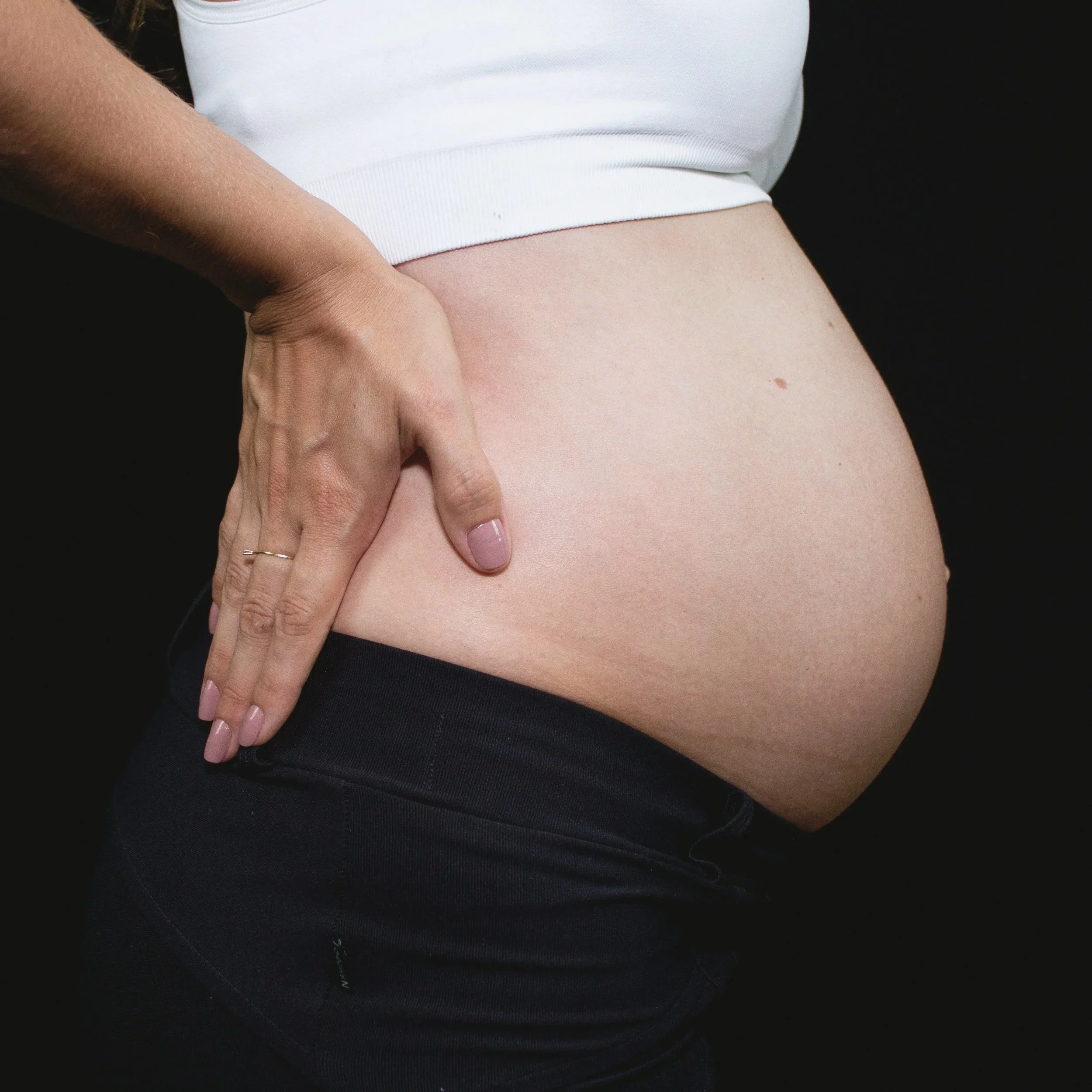
You can't stand at the kitchen counter long enough to finish making dinner. You shift in your desk chair every five minutes, trying to find a position that doesn't send pain through your lower back. Rolling over in bed has become a project. Getting up from the couch requires a strategy. The pain wraps from your lower back around your hips and it gets worse every week as the belly grows.
You expected some discomfort. You did not expect this. The ache that starts the moment you stand and doesn't let up until you lie down. The sharp catch when you reach for something on a low shelf. The way walking, something that used to feel automatic, now requires concentration because your body doesn't move the way it used to.
You're in your third trimester and you have weeks to go. The thought of this getting worse before it gets better is hard to sit with, though sitting itself is part of the problem.
Your body is doing something remarkable right now. It's also asking for support it probably isn't getting.
Why Back Pain Happens During Pregnancy
Pregnancy back pain has specific, identifiable causes. Understanding them helps you know what kind of relief will actually work.
Shifting center of gravity. As the uterus expands and the belly grows forward, your center of gravity shifts. Your lower back compensates by increasing its curve (lordosis), which compresses the lumbar spine and strains the muscles and ligaments supporting it. Research published in Spine found that the degree of lumbar lordosis increase during pregnancy directly correlates with the severity of lower back pain.
Relaxin and ligament laxity. The hormone relaxin, which rises during pregnancy to prepare your pelvis for delivery, loosens ligaments throughout your body. This is necessary for birth. It also reduces the stability of your sacroiliac (SI) joints, your pubic symphysis, and your lumbar spine. Joints that were stable become mobile, and the muscles surrounding them work harder to compensate. This is why the pain often centers at the SI joints, the two dimples on either side of your lower spine.
Weight and load. The additional weight of the baby, the placenta, the amniotic fluid, and the increased blood volume all add load to a spine that's already working harder due to the postural shift. Research published in BMC Pregnancy and Childbirth found that up to 70 percent of pregnant women experience back pain, with prevalence and severity increasing in the third trimester.
Muscle fatigue and imbalance. Your abdominal muscles stretch and thin as the uterus grows, reducing their ability to support your spine from the front. Your back muscles take on more work. The glutes and hip stabilizers fatigue from the increased demand. The result is a muscular system working beyond its capacity, which produces pain.
Nervous system tension. Pain is amplified by a nervous system that's already activated. Pregnancy increases baseline arousal. If you're carrying anxiety, poor sleep, or chronic stress alongside the physical load, your pain threshold drops and the same structural changes produce more discomfort. For more on how the nervous system affects the pregnancy experience, see our article on anxiety during pregnancy.
How Pregnancy Back Pain Shows Up
The location and character of the pain tell you what's involved.
Lower lumbar pain. A deep ache across the lower back, worse with standing and walking, better with rest. This is typically related to the increased lordosis and muscular strain.
SI joint pain. Pain on one or both sides of the lower spine, right where the pelvis meets the sacrum. It can be sharp or aching and often worsens with activities that load one leg at a time: climbing stairs, getting out of a car, rolling over in bed. This is driven by the relaxin-related instability.
Pain that radiates into the buttock or leg. Compression or irritation of the sciatic nerve can produce pain, tingling, or numbness that travels from the buttock down the back of the leg. This can be caused by the expanding uterus pressing on the nerve, by piriformis muscle tightness, or by disc changes related to the increased spinal load.
Pubic symphysis pain. Pain at the front of the pelvis, where the two pubic bones meet. Relaxin loosens this joint, and the resulting instability produces a sharp or grinding pain with walking, turning in bed, or separating the legs.
Round ligament pain. Sharp, sudden pain on one or both sides of the lower abdomen, often triggered by quick movements, sneezing, or changing position. This is the round ligament stretching as the uterus grows and is usually brief.
Why Standard Approaches Often Fall Short
Your OB may have told you to try a pregnancy pillow, take Tylenol, and avoid lifting. This advice is reasonable and it addresses the surface. A pillow helps you sleep. Tylenol reduces pain temporarily. Avoiding lifting reduces load. None of these change what's producing the pain in the first place.
Most pain medications are limited or contraindicated during pregnancy. NSAIDs like ibuprofen are off-limits in the third trimester. Muscle relaxants are generally avoided. This leaves pregnant women with fewer pharmaceutical options at the exact time their body is under the most structural stress.
Physical therapy can help when it's available and when the therapist has prenatal training. Many women are referred to general PT that doesn't account for the specific mechanics of a pregnant body. Exercises prescribed for non-pregnant low back pain may not be appropriate or may need significant modification.
What's consistently missing is treatment that addresses the pain, the structural instability, and the nervous system response together. Pregnancy back pain responds best to an approach that works with all three.
What Actually Helps
Acupuncture. Research published in Acupuncture in Medicine found that acupuncture significantly reduced pregnancy-related lower back and pelvic pain compared to standard care alone. Acupuncture is safe throughout pregnancy when performed by a practitioner trained in prenatal care. Treatment addresses pain directly through local and distal points, reduces muscle tension, calms the nervous system, and improves circulation to the tissues under strain. Most women feel significant relief during the session itself, and the effects build with consistent treatment. We recommend weekly sessions through the third trimester. For a broader look at acupuncture during pregnancy, see our article on acupuncture during pregnancy.
Pelvic support. A maternity support belt (sacroiliac belt) worn low across the hips can stabilize the SI joints and reduce the load on the lumbar spine. This is one of the simplest and most effective tools for SI joint and pubic symphysis pain. Research published in the European Spine Journal found that pelvic belts significantly reduced pelvic girdle pain during pregnancy.
Prenatal-specific movement. Gentle stretching for the hip flexors, piriformis, and hamstrings can relieve tension patterns that contribute to pain. Pelvic tilts and cat-cow stretches help maintain mobility in the lumbar spine. Swimming and water-based exercise reduce the gravitational load on your spine while keeping you moving. Prenatal yoga, with a qualified instructor, supports both the structural and nervous system components.
Positioning and body mechanics. Sleeping on your side with a pillow between your knees and under your belly reduces SI joint strain. Sitting with lumbar support and your feet flat on the floor reduces lower back compression. Standing with your weight evenly distributed through both feet keeps the pelvis more stable.
Heat. A warm compress or hot water bottle on the lower back or SI joints provides temporary relief by relaxing the muscles in spasm and increasing local blood flow. Keep the temperature comfortable and avoid placing heat directly on the belly.
What This Looks Like in Practice
A woman came to us at 38, thirty-two weeks into her first pregnancy. Her back pain had started around week twenty and had been getting steadily worse. By the time she came in, she couldn't stand for more than fifteen minutes, couldn't sit through a full meeting, and was waking three times a night because every position eventually became painful.
Her OB had recommended a pregnancy pillow and Tylenol. She'd tried both. The pillow helped marginally. The Tylenol took the edge off for an hour. She'd seen a physical therapist twice but the exercises she was given made the pain worse, and she'd stopped going.
She brought her own pillow from home to every appointment because she couldn't lie on any surface without it. She apologized for the pillow. She apologized for the extra time it took her to get on and off the table.
Her pain was centered at her SI joints with radiation into her right buttock. She had significant tension in her piriformis and lower back muscles. Her posture had shifted dramatically to accommodate the belly, and the muscular compensation was producing constant strain.
We started with twice-weekly acupuncture focused on reducing SI joint inflammation, releasing the piriformis and surrounding muscles, and calming her nervous system. She was also dealing with pregnancy-related anxiety and poor sleep, which were amplifying the pain.
Around week three, the pain migrated. It moved from her lower back into her hips bilaterally, and she was frightened that the treatment was spreading it. We explained that as the primary tension pattern released, deeper layers of compensation were surfacing. Her SI joints were settling, and the muscles that had been guarding them were letting go, which temporarily shifted the pain pattern. We adjusted her points and stayed with it.
By week five, the night waking had reduced from three times to once. She could sit through a full meeting. The SI joint pain had diminished from a constant presence to something that appeared when she overdid it and resolved when she rested.
By week seven, she told us she'd stopped bringing the pillow. She said she hadn't even thought about it until she was already on the table and realized it wasn't in her bag. Her body had become comfortable enough to lie down without it. She delivered at 39 weeks. She told us afterward that the last seven weeks of her pregnancy had been manageable because of the treatment, and that she hadn't expected manageable to feel as good as it did.
For more on preparing your body for delivery, see our article on preparing for labor.
Read stories from women we've worked with →
Frequently Asked Questions
Is back pain normal during pregnancy? Back pain during pregnancy is extremely common, affecting up to 70 percent of pregnant women. It is driven by specific structural, hormonal, and muscular changes that are identifiable and treatable. Common does not mean you should endure it without support. Treatment can significantly reduce pain and improve your quality of life through the remainder of your pregnancy.
Is acupuncture safe for back pain during pregnancy? Yes. Acupuncture is safe throughout pregnancy when performed by a practitioner trained in prenatal care. Research has shown that acupuncture significantly reduces pregnancy-related back and pelvic pain. It is one of the most effective non-pharmaceutical options available during pregnancy, when most pain medications are limited or contraindicated.
When should I worry about back pain during pregnancy? Most pregnancy back pain is musculoskeletal. You should contact your provider if the pain is severe and sudden, if it's accompanied by fever, vaginal bleeding, or painful urination, if it comes in regular waves (which could indicate preterm labor), or if you experience numbness or weakness in your legs. Otherwise, persistent back pain that affects your daily function is worth treating even when it isn't an emergency.
Your Next Step
Pregnancy back pain responds well to targeted support. You don't have to manage it with pillows and Tylenol for the next several weeks. Acupuncture is safe, effective, and can change the way you experience the rest of your pregnancy.
Learn more about our Preconception & Fertility stage or contact us at 212.432.1110 or info@fafwellness.com.
Keep Reading:
• Acupuncture During Pregnancy: What's Safe and What Helps
• Preparing for Labor: Natural Ways to Ready Your Body