
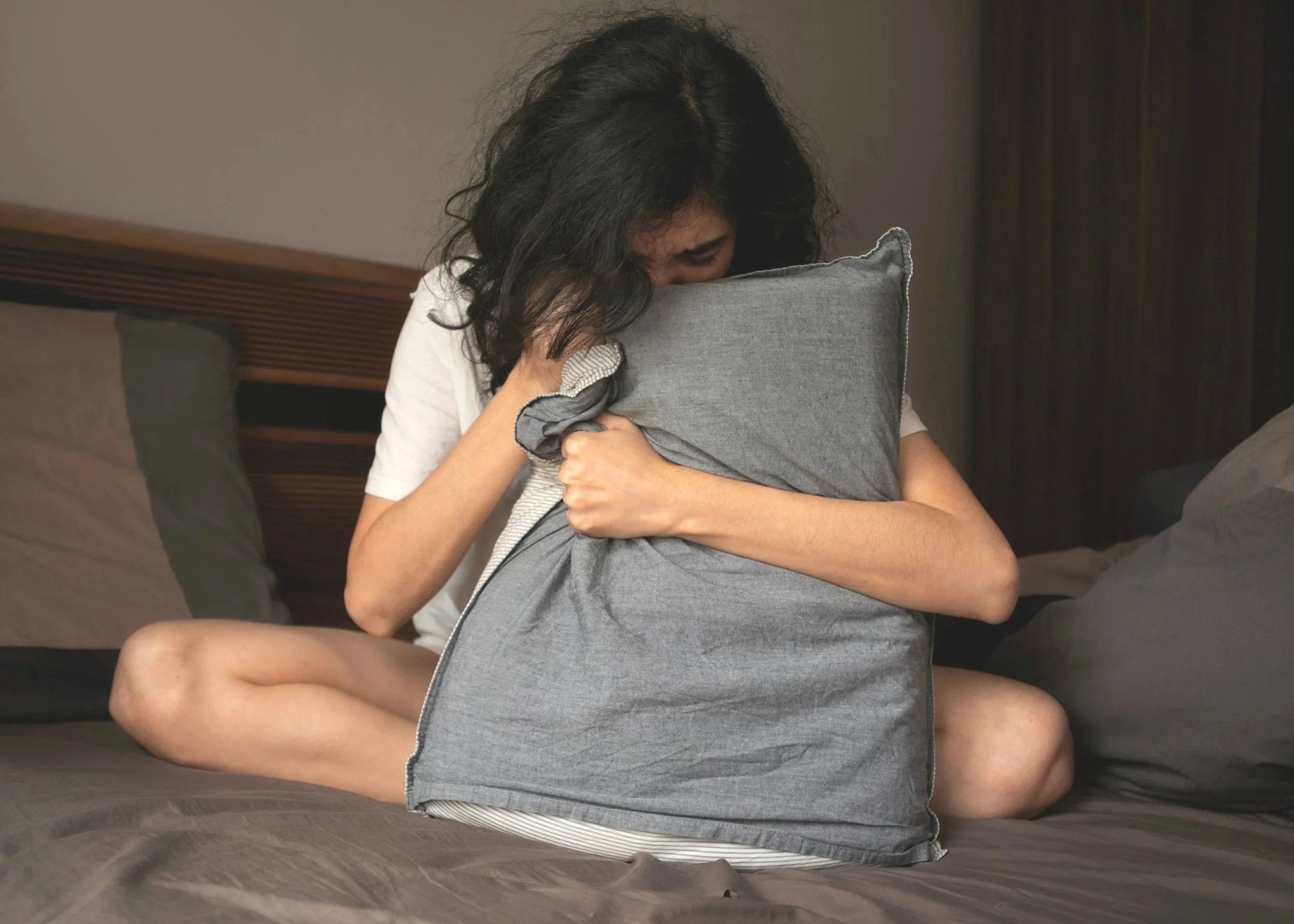
You've never been an anxious person. You've handled stress, navigated challenges, managed a full life without this kind of unease. But now there's a buzzing in your chest that won't settle. A sense of dread you can't explain. You wake in the middle of the night with your heart racing, your mind spinning through scenarios that wouldn't have fazed you before.
You're wondering if something is wrong with you. If this is who you are now. If you're losing your mind.
I want you to know: you're not. What you're experiencing has a cause, and that cause isn't a character flaw or a mental breakdown. For many women, anxiety is one of the first and most disorienting symptoms of perimenopause, and it often appears before any changes to your cycle.
This article will help you understand why anxiety happens during this transition and what actually helps. Not just managing symptoms, but addressing what's underneath them.
Why Anxiety Appears During Perimenopause
Anxiety during perimenopause isn't random, and it isn't purely psychological. There are real physiological reasons why your nervous system is responding differently now.
Hormones and Your Brain
Estrogen does far more than regulate your reproductive system. It directly affects your brain chemistry, particularly the neurotransmitters that regulate mood, including serotonin, dopamine, and GABA.
When estrogen is stable, these neurotransmitters tend to function smoothly. During perimenopause, estrogen doesn't decline in a straight line. It fluctuates dramatically, sometimes spiking higher than during your reproductive years, sometimes dropping significantly. These swings affect your brain chemistry in real time. One week you might feel fine. The next, the same circumstances feel overwhelming.
Progesterone also plays a role. It has a calming effect on the brain, activating the same receptors as anti-anxiety medications. Progesterone typically begins declining before estrogen does, which is why many women experience anxiety and sleep disruption before their periods become irregular. The calming influence you didn't even know you had is quietly withdrawing.
But It's Not Just Hormones
Here's what often gets missed: hormones are only part of the picture. The severity of anxiety during perimenopause depends significantly on what you're bringing into this transition.
Women who arrive at perimenopause with nervous systems that have been in overdrive for years tend to have more severe anxiety. The hormonal shifts don't create the dysregulation. They reveal it. They amplify what was already there.
Think of it this way: if your nervous system has been running at an 8 out of 10 for years, managing stress through sheer willpower, the hormonal fluctuations of perimenopause might push it to a 10. Suddenly you're experiencing symptoms you never had before, not because the hormones alone caused them, but because your system no longer has the margin to compensate.
This is why two women with similar hormone levels can have completely different experiences. It's about the state of your nervous system when the hormones start shifting.
What's Actually Driving Your Anxiety
Understanding the factors that contribute to perimenopause anxiety gives you leverage. They're places where you can intervene.
A Nervous System That Never Settles
This is the biggest one. Many women in perimenopause have been living in a low-grade stress response for years, sometimes decades. They've been in fight-or-flight so long it feels normal. They don't know what calm actually feels like in their bodies.
When your nervous system is chronically activated, it becomes sensitized. It takes less to trigger a stress response. Things that wouldn't have bothered you before now feel threatening. Your startle response is heightened. You feel on edge without knowing why.
Perimenopause asks your nervous system to adapt to significant changes. If your nervous system is already stuck, that adaptation is harder. The anxiety you're experiencing may be your nervous system's way of saying it can't keep going like this. For more on this pattern, see our article on signs of a dysregulated nervous system.
Sleep Disruption
Poor sleep and anxiety create a vicious cycle. Sleep deprivation increases anxiety. Anxiety disrupts sleep. And perimenopause often disrupts sleep through night sweats, middle-of-the-night waking, and difficulty falling asleep.
When you're not sleeping well, your nervous system becomes more reactive. Your emotional regulation suffers. Small things feel big. Your resilience disappears. Many women find that addressing sleep is the single most effective intervention for anxiety.
Blood Sugar Instability
When your blood sugar drops, your body releases stress hormones, including adrenaline and cortisol, to bring it back up. If you're skipping meals, eating irregularly, or relying on sugar and refined carbohydrates, you may be triggering stress responses multiple times a day without realizing it.
The symptoms of low blood sugar, shaking, racing heart, sweating, difficulty concentrating, can feel identical to anxiety. Some women discover that what they thought was anxiety was actually blood sugar crashes, and stabilizing their eating dramatically reduces their symptoms.
Caffeine
Caffeine is a stimulant that directly activates your stress response. It increases cortisol and adrenaline. For many women, caffeine that was fine before perimenopause becomes a significant anxiety trigger during it.
This is hard to hear if coffee is how you get through the day. But if you're experiencing anxiety and drinking caffeine, this is worth examining honestly. The temporary energy isn't free. You're borrowing from a system that may already be depleted.
Alcohol
Alcohol might feel like it calms you down, but the effect is temporary and the rebound makes anxiety worse. Alcohol disrupts sleep architecture, depletes nutrients your nervous system needs, and increases anxiety in the days following consumption. Many women notice significant improvement in anxiety when they reduce or eliminate alcohol.
Unprocessed Stress and Emotions
Anxiety is sometimes the body's way of expressing what hasn't been processed. The stress you've been pushing through. The emotions you haven't had time to feel. The needs you've been ignoring. The situations in your life that aren't working but that you've been tolerating.
Your body keeps the score. If there's unprocessed material, it often surfaces during perimenopause when your usual coping mechanisms stop working as well. It's information asking for attention.
What Actually Helps
The conventional approach to perimenopause anxiety often jumps straight to medication. Antidepressants or anti-anxiety medications can be appropriate in some situations, but they don't address the underlying causes. For many women, there's significant room to improve anxiety through nervous system work and lifestyle changes before, or alongside, medication.
Regulate Your Nervous System
This is the foundation. If your nervous system is stuck in overdrive, everything else will be harder. The goal isn't to never feel stressed. It's to help your nervous system learn to move between activation and rest, to come back to baseline after stress instead of staying elevated.
This work isn't complicated, but it requires consistency. Simple practices done regularly rewire your nervous system over time.
Breath work is one of the most direct ways to shift your nervous system state. Slow, extended exhales activate the parasympathetic nervous system, the rest-and-digest state that counterbalances stress. Even a few minutes of intentional breathing can interrupt an anxiety spiral.
Body-based practices help you build capacity to tolerate sensation without interpreting everything as danger. This might be gentle yoga, walking, or simply practicing noticing what you feel in your body without reacting to it. Many anxious women have learned to live from the neck up, disconnected from their bodies. Coming back into your body, slowly and safely, is part of healing.
Creating moments of genuine rest throughout your day matters more than occasional vacations. Your nervous system needs regular signals that you're safe. This might mean pauses between tasks, time without stimulation, moments where you're not producing or consuming anything. For specific techniques, see our article on how to regulate your nervous system.
Prioritize Sleep
You cannot out-supplement or out-exercise poor sleep. If you're not sleeping well, this needs attention.
Sleep hygiene basics matter: a dark, cool room; consistent sleep and wake times; limiting screens before bed. But for many perimenopausal women, the disruption goes deeper. Night sweats, racing thoughts, middle-of-the-night waking with a pounding heart.
Addressing the nervous system often helps sleep. When your system can settle, sleep comes more easily. Some women also benefit from targeted support, whether that's addressing night sweats through other means, supporting progesterone naturally, or working with a provider who understands the sleep-hormone connection. For more on this connection, see our article on sleep and your nervous system.
Stabilize Blood Sugar
Eat regular meals with adequate protein and fat. Don't skip breakfast. Don't go long stretches without eating. Reduce refined carbohydrates and sugar, which spike blood sugar and lead to crashes.
This is one of the simplest interventions, and for some women, one of the most effective. When you stop triggering stress responses through erratic eating, your baseline anxiety often decreases noticeably.
Reduce or Eliminate Caffeine and Alcohol
I know this is hard. These are often the things women reach for to cope. But if you're experiencing significant anxiety, an honest trial without them is worth considering.
Try eliminating caffeine for two weeks and notice what happens. Try a month without alcohol and see how your anxiety, and your sleep, respond. You can always go back. But many women are surprised by how much these substances were contributing to their symptoms.
Move Your Body, Gently
Exercise helps anxiety, but the type matters. Intense exercise raises cortisol. For women who are already depleted and anxious, more intensity can make things worse.
Walking is one of the best things you can do. It regulates the nervous system, processes stress hormones, and doesn't deplete you further. Strength training supports overall health without the cortisol spike of high-intensity cardio. Gentle yoga or stretching can directly calm the nervous system.
If you've been pushing yourself with intense workouts and your anxiety isn't improving, consider whether a gentler approach might serve you better right now.
Address What's Underneath
Sometimes anxiety is pointing to something that needs to change. A job that's draining you. A relationship that isn't working. A pace of life that isn't sustainable. Needs that aren't being met.
You can do all the breathing exercises in the world, but if your life circumstances are genuinely anxiety-provoking, the anxiety is giving you accurate information. Part of healing may be making changes you've been avoiding.
What This Looks Like in Practice
A woman came to us at 45, convinced something was seriously wrong with her. For six months, she'd been experiencing waves of anxiety that seemed to come from nowhere. Her heart would race. Her chest would tighten. Sometimes she'd feel like she couldn't breathe. She'd gone to the emergency room twice, certain she was having a heart attack. Both times, they found nothing wrong.
Her doctor suggested antidepressants. She wasn't opposed, but she wanted to understand what was happening first. She'd never been anxious before. This didn't feel like her.
When we talked, the picture became clearer. Her periods were still regular, so she hadn't considered perimenopause. But she'd been waking between 3 and 4am for months, unable to fall back asleep. She was exhausted but wired. She'd been drinking more wine in the evenings to take the edge off. She was running on coffee during the day, sometimes four or five cups.
She'd also been under enormous stress for the past two years. A parent with dementia. A child struggling in school. A husband who traveled constantly. She'd been holding it all together, but there was no room for herself anywhere. She couldn't remember the last time she'd felt genuinely relaxed.
Her nervous system was maxed out. It had been running in overdrive for years, and she'd been masking the exhaustion with caffeine and numbing the stress with wine. The hormonal shifts of early perimenopause had pushed her past what her system could handle. The anxiety wasn't a malfunction. It was a signal that something had to change.
We started with the basics. She cut back caffeine gradually, then eliminated it. She stopped the nightly wine. She started eating breakfast, which she'd been skipping for years. She began a simple breathing practice, just five minutes twice a day, to start teaching her nervous system what settling felt like.
The hardest part was what she couldn't fix immediately: the circumstances of her life that were genuinely hard. But she started making small changes there too. She asked for help with her parent's care. She stopped saying yes to things she didn't have capacity for. She started protecting time for herself, even just thirty minutes a day, without guilt.
The shift was gradual. The first thing she noticed was sleeping better. Then the waves of panic became less frequent. By month three, she recognized herself again. The anxiety wasn't gone entirely, but it was manageable. It no longer controlled her.
What she said at our last session stayed with me: "I thought my body was betraying me. But it was actually trying to save me. It was the only way it could get me to stop."
When to Seek Additional Support
Nervous system work and lifestyle changes help many women significantly. But anxiety exists on a spectrum, and some situations warrant additional support.
If your anxiety is severe, if you're having panic attacks that are disrupting your life, if you're unable to function, if you're having thoughts of self-harm, please reach out to a mental health professional. Therapy can be enormously helpful, particularly approaches that work with the body and nervous system. Medication can provide relief while you address underlying factors.
You can work on your nervous system and your lifestyle while also getting professional mental health support. Sometimes you need both.
Your Next Step
If you're experiencing anxiety during perimenopause, please know this: you're not broken, you're not crazy, and you're not stuck with this. Anxiety responds to intervention. When you understand what's driving it and address those factors, things can shift significantly.
This is the heart of our Perimenopause & Menopause stage focuses on nervous system healing and lifestyle medicine. We help women understand what their bodies are actually asking for and make the changes that create real relief.
Contact us at 212.432.1110 or info@fafwellness.com.
Keep Reading: