
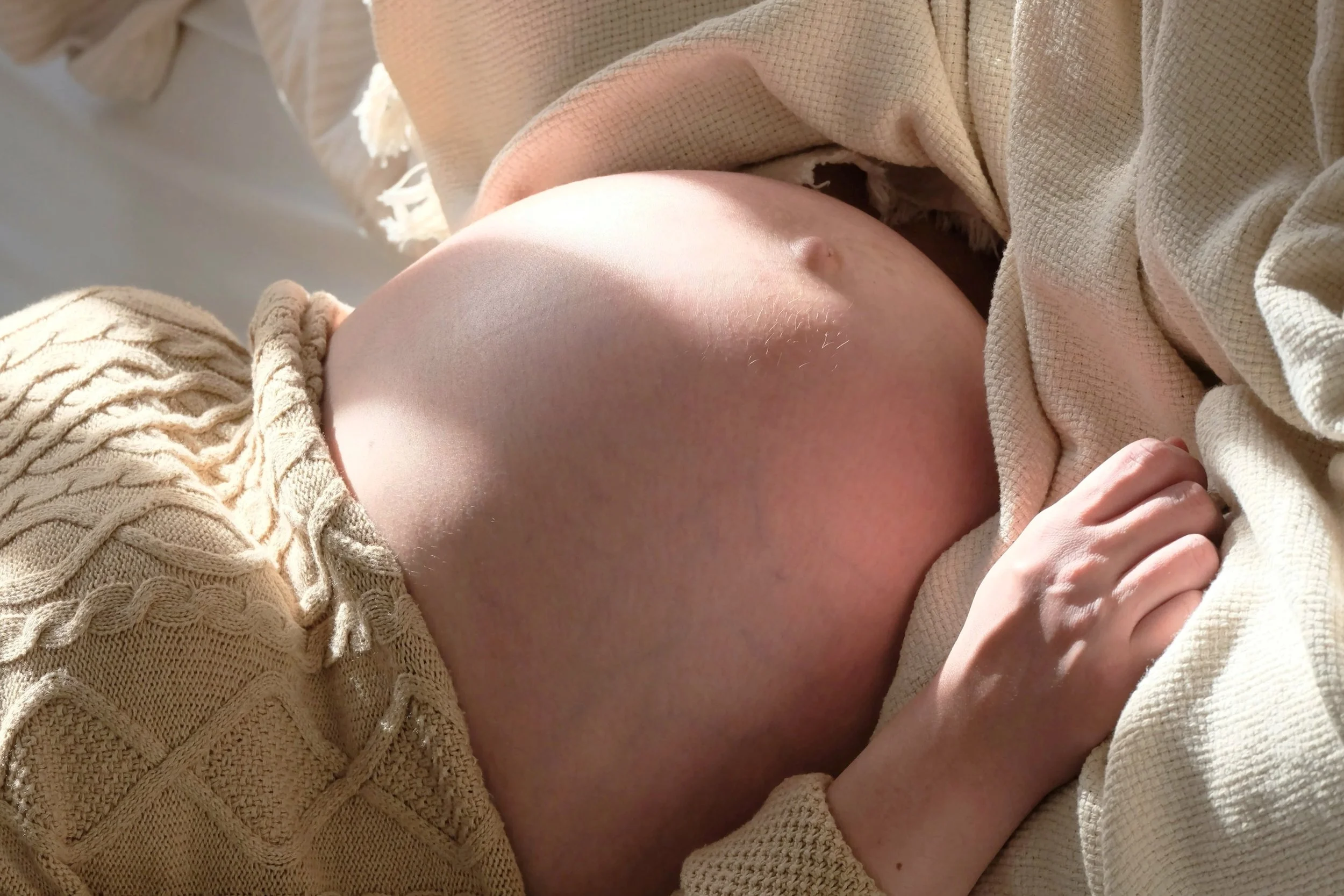
The appointment was supposed to be routine. Your provider moved the ultrasound wand, paused, and mentioned that the baby's head was up near your ribs. Suddenly the birth you had been picturing came with a new question mark.
If your baby is breech, you have time and you have options. Many babies turn on their own in the final weeks. For those who need encouragement, acupuncture and moxibustion are gentle, well-studied ways to support the turn. This article explains what breech means, why it happens, and how we help your body and your baby during this window.
What Does It Mean When Your Baby Is Breech?
A breech baby is positioned bottom first or feet first, with the head up toward your ribs. There are a few variations. In a frank breech, the bottom leads with legs folded up toward the face. In a complete breech, the baby sits cross-legged. In a footling breech, one or both feet lead.
Breech is common earlier in pregnancy, when there's plenty of room to move. Most babies settle head down by the third trimester. By term, breech occurs in about 3 to 4 percent of pregnancies, according to guidance from the American College of Obstetricians and Gynecologists published in Obstetrics & Gynecology.
Your provider will usually check position more closely from around 36 weeks. If you learn earlier that your baby is breech, there's often still plenty of time.
Why Some Babies Stay Breech
Most of the time there's no single clear cause. Several factors can play a part.
Room and Fluid
Babies need space to turn. A first pregnancy with firm abdominal muscles, lower amniotic fluid, or a larger baby can leave less room. Very high fluid can do the opposite and allow a baby to keep moving.
The Shape of the Uterus and Placenta
A placenta positioned low or at the top of the uterus, fibroids, or a uterus with an unusual shape can make head down less comfortable for the baby. Your provider will look for these on ultrasound.
Tension in the Body
In Chinese medicine, the uterus needs warmth and free-flowing qi and blood to do its work. When a mother is depleted, cold, or holding a lot of tension in the pelvis and lower back, the space the baby moves within can feel tighter. We see this often in women who have worked through their pregnancy without much rest. Their bodies are carrying more than they show. The round ligaments and the muscles around the pelvis respond to stress like the rest of the body, and when they stay tight, the uterus has less give. Softening that tension is part of what we work on.
Your Medical Options
Your OB or midwife will guide the medical side. The most common option is an external cephalic version, or ECV, where a provider uses their hands on your belly to guide the baby into a head-down position, usually around 37 weeks. According to the same ACOG guidance, ECV succeeds in a little more than half of attempts. If the baby stays breech, your provider will talk with you about a planned cesarean or, in some practices, a vaginal breech birth.
Acupuncture and moxibustion work alongside this care. We always encourage you to tell your provider you're receiving treatment.
How Acupuncture and Moxibustion Can Help
Moxibustion at BL67
Moxibustion is a traditional warming technique. A stick of dried mugwort is lit and held near a specific acupuncture point, called BL67 or Zhiyin, at the outer corner of each little toe. The warmth is gentle and pleasant. Many women notice their baby moving more during and after treatment.
In Chinese medicine, BL67 is the last point on the Bladder channel, where it connects with the Kidney channel. The Kidneys govern the uterus and reproduction, so this point has been used for centuries to influence the position of the baby. Its name, Zhiyin, means reaching yin, a reference to that connection.
The research is encouraging. A 2013 randomized trial in Acupuncture in Medicine followed 406 women with breech babies at 33 to 35 weeks. With moxibustion at BL67, 58.1 percent of babies were head down at birth, compared with 43.4 percent after sham treatment and 44.8 percent with usual care. A 2004 randomized trial of 240 women in the Journal of Maternal-Fetal & Neonatal Medicine also found more babies turned head down when acupuncture and moxibustion were used together.
A 2023 review in the Cochrane Database of Systematic Reviews pooled the evidence and found that moxibustion modestly reduced breech presentation at birth, and that moxibustion combined with acupuncture was linked to fewer cesareans in two trials. The reviewers rated the certainty as moderate and called for further research. We share this honestly. Moxibustion helps some babies turn, and it doesn't work for every pregnancy.
Acupuncture for the Whole Body
Turning is easier when the body is relaxed. Alongside moxibustion, we use acupuncture to soften tension in the pelvis and lower back, support circulation to the uterus, and calm the nervous system. Many women find these sessions restful in a week that otherwise feels uncertain. For more on this topic, read our article on acupuncture during pregnancy.
When to Begin
The ideal window is between 32 and 36 weeks, with many trials starting at 33 to 35 weeks. There's still room for the baby to move, and the baby is close to settling into a final position. We usually see you in the clinic once or twice a week and teach you to continue moxibustion at home, often for 10 to 20 minutes a day over one to two weeks. If you're already past 36 weeks, call us. Treatment can still help, and it can also support you before an ECV.
Is It Safe?
Moxibustion and acupuncture are generally considered safe in pregnancy when done by a trained practitioner. The main risk with moxibustion is a minor burn if the stick is held too close, which is why we teach you carefully before you practice at home. Treatment may not be appropriate if you have placenta previa, are carrying multiples, have bleeding, or have other concerns your provider has flagged. We ask about your history first and coordinate with your OB or midwife.
What You Can Do at Home
Practice Moxibustion as Taught
Keep the stick about an inch from the skin and move it away if the heat feels strong. Sit comfortably with loose clothing. A partner can help, which many couples find becomes a quiet ritual at the end of the day.
Make Space in Your Body
Some women try positions such as forward-leaning inversions or resting on hands and knees. The research on positions alone is limited, so check with your provider before trying them. Gentle movement, warm baths if your provider approves, and loosening the lower back can all help your body feel more open. For more on this topic, read our article on back pain during pregnancy.
Settle Your Nervous System
Worry about the birth plan can keep your body braced. Slow, steady breathing, time outdoors, and talking through your fears with someone you trust all help your system soften. For more on this topic, read our article on anxiety during pregnancy.
If Your Baby Doesn't Turn
Some babies stay breech for reasons no one can change, such as the position of the placenta or the length of the cord. If your baby doesn't turn, nothing about your preparation was wasted. Acupuncture can help you go into an ECV calmer, and if a cesarean becomes the plan, we can help you prepare your body and support your recovery afterward. For more on this topic, read our article on preparing for labor.
Recovery after a cesarean asks a lot of your body, especially with a newborn in your arms. Acupuncture, nourishing food, and rest in the first weeks help your tissues heal and your energy return. For more on this topic, read our article on postpartum recovery.
What This Looks Like in Practice
At her 34-week appointment, a first-time mother learned her baby was in a frank breech position. Her OB told her there was still time for the baby to turn and recommended an ECV at 37 weeks if the baby stayed breech, with a planned cesarean as the backup. She had been hoping for an unmedicated birth and felt the plan slipping away.
She came to us that week. She had worked long hours through her pregnancy, often skipped lunch, and described her lower back as tight most days. We began acupuncture twice a week to relax her pelvis and lower back, and we taught her and her partner to do moxibustion at home each evening.
At her 36-week scan, the baby was still breech. She was discouraged and wondered whether to stop. We talked it through, kept treatment going, and shifted our focus toward helping her stay calm ahead of the ECV.
On the morning of the ECV, she came in for a session first. The version was successful on the first attempt, and her baby stayed head down. She later said that what helped most was feeling steady going into the procedure, whatever the outcome.
Read stories from women we've worked with →
Frequently Asked Questions
When should I start moxibustion for a breech baby? Between 32 and 36 weeks is ideal. Many studies began treatment at 33 to 35 weeks.
How many sessions will I need? Most women come in once or twice a week and do moxibustion at home daily for one to two weeks. We adjust based on your baby's position and your provider's updates.
Does moxibustion work for every breech baby? No treatment works every time. Research shows moxibustion increases the chance of turning, and it's most effective when started in the right window.
Your Next Step
Learning your baby is breech can unsettle your plans for birth. With time, gentle support, and coordination with your provider, many babies turn, and either way you can go into your birth feeling prepared.
If your baby is breech, or you're approaching 34 weeks and want support, we can help.
Learn more about our Pregnancy & Postpartum stage or contact us at 212.432.1110 or info@fafwellness.com.
Keep Reading: